













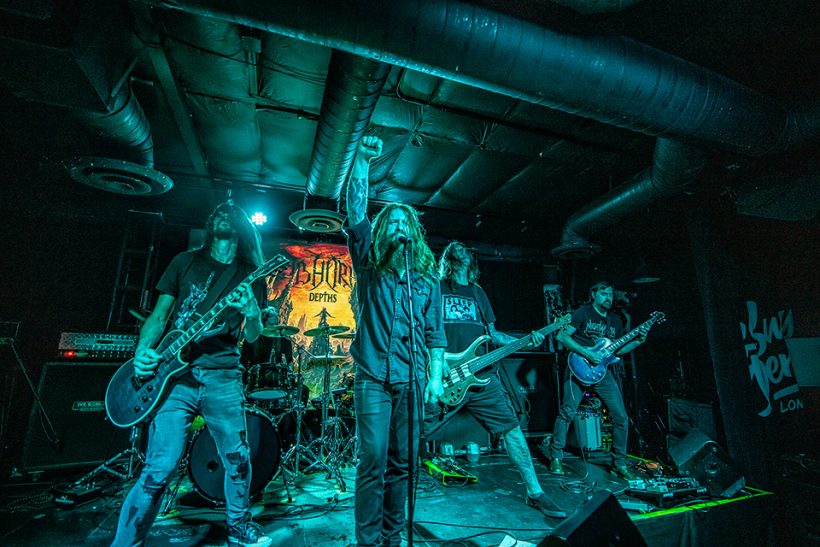





























Last night at The Bitter End, New York did not simply witness a concert—it bore witness to a rupture. Fenix Rising unfolded like a cinematic uprising, raw and relentless, where music stopped being entertainment and became testimony. The room was charged with something volatile: grief, survival, faith, rage, hope—all colliding in real time.
At the center of it all stood Allan Klepfisz, Global CEO of FENIX360, whose vision has turned Fenix Rising into more than a series—it is a movement. During the show, Allan was honored with the United Nations Humanitarian Award, presented by UN ambassadors Gloria Cressler and Monica Sanchez. The moment did not pause the night—it deepened it. The recognition felt earned not by ceremony, but by impact. This was leadership forged in belief: that music and culture are humanitarian forces, and that artists deserve dignity, equity, and power over their own lives.

The performances that followed carried that belief like a torch.
Lauren Byrd opened the night as if tearing pages from her own history. Her voice cracked open the room, intimate yet unflinching, delivering emotion that felt lived rather than rehearsed. There was no distance between artist and audience—only shared breath and unspoken understanding.

ShanDaria arrived like a force of nature. Her presence was commanding, almost spiritual, as if channeling generations of resilience through every note. She didn’t perform songs; she invoked them. The stage felt sacred, heavy with meaning, impossible to ignore.

Then Nia Renee stepped into the light and the room shifted again. Her voice carried both fracture and fire—pain shaped into beauty, struggle turned into resolve. Each lyric felt like a survival instinct given sound. The audience didn’t applaud so much as hold space, sensing they were watching something fragile and brave being rebuilt in real time.

When gospel headliner Lamont Sanders took the stage, the night crossed into revelation. His voice lifted the room out of itself, dissolving barriers between strangers. Tears flowed freely. Hands rose without self-consciousness. The Bitter End became a sanctuary—part church, part battlefield, part refuge. It was not about belief systems; it was about release.

Keyboardist Ashley Peoples was the musical backbone of the night, seamlessly anchoring every performance with precision, sensitivity, and soul. Moving effortlessly between gospel, R&B, and contemporary styles, Ashley elevated each artist with dynamic arrangements and an intuitive feel that kept the energy flowing without ever overpowering the vocals. Her playing provided both structure and freedom—supporting, responding, and driving the music forward—making her an essential, unifying force throughout the entire show.
This is what a musical uprising looks like. It is not clean. It is not polite. It is urgent.
Under Allan Klepfisz’s stewardship, Fenix Rising is not about chasing charts or applause. It is about restoring humanity to an industry that has too often stripped it away. Last night was proof that when artists are given space to tell the truth—without filters, without compromise—music becomes a force that heals and disrupts at the same time.
What happened at The Bitter End cannot be reduced to a review.
It was a reckoning.
And it is far from over.
The official website for FENIX360 may be found at https://www.fenix360.com
Photo Credits: Billy Hess