




























Making-of documentaries tend to be amixed-bag proposition. They can risk seeming like extras on aBlu-Ray release or exercises in navel-gazing. But when Eleanor Coppola picked up acamera and began to film the on-set circus of her husband Francis’ chaotic 1979 production of Apocalypse Now in her film Hearts of Darkness, she showed herself capable of extracting beautiful insight from the process of filmmaking. It helped, of course, that she watched with the eye of awife and amother who knew her family’s foibles and talents.
Making Marie Antoinette is, ostensibly, about the ambitious process of bringing what many now see as amodern classic to the screen. When Sofia Coppola was given her largest budget to date – $40 million – to make her third film, she had her work cut out for her. An ambitious stab at representing ahistorical figure from agirlish, candy-coloured POV, it required alarger cast and crew than she had yet managed, with hordes of lavishly costumed extras and special permission to film in the Palace of Versailles. And so Eleanor, dressed in black and trying to move invisibly through the chaos, joined her daughter on this courageous project of female ambition and artistry.
Get more Little WhiteLies
Constructed from 80hours of footage Eleanor shot on set in 2005, it wasn’t until the Covid-19 lockdown that she took it upon herself to make something from it. It was only after her death in 2024 that Sofia gathered these incomplete materials and set about finishing them. Bringing in lines from her mother’s journals, spoken in voiceover throughout by Diane Lane, Making Marie Antoinette plays like aposthumous transmission as much as it does atribute to Eleanor.
“Sofia looks too small and unprepossessing to be the director of a $40 million movie,” she says near the start of the doc. It sounds less like doubt and more like concern for her child. We see her camera zoom in on Sofia’s face on numerous occasions, searching her daughter’s expression for anxiety. As Sofia, now amother of teenage daughters herself, recounts her late mother’s reaction to her, it must feel like apoignant passing of thebaton.
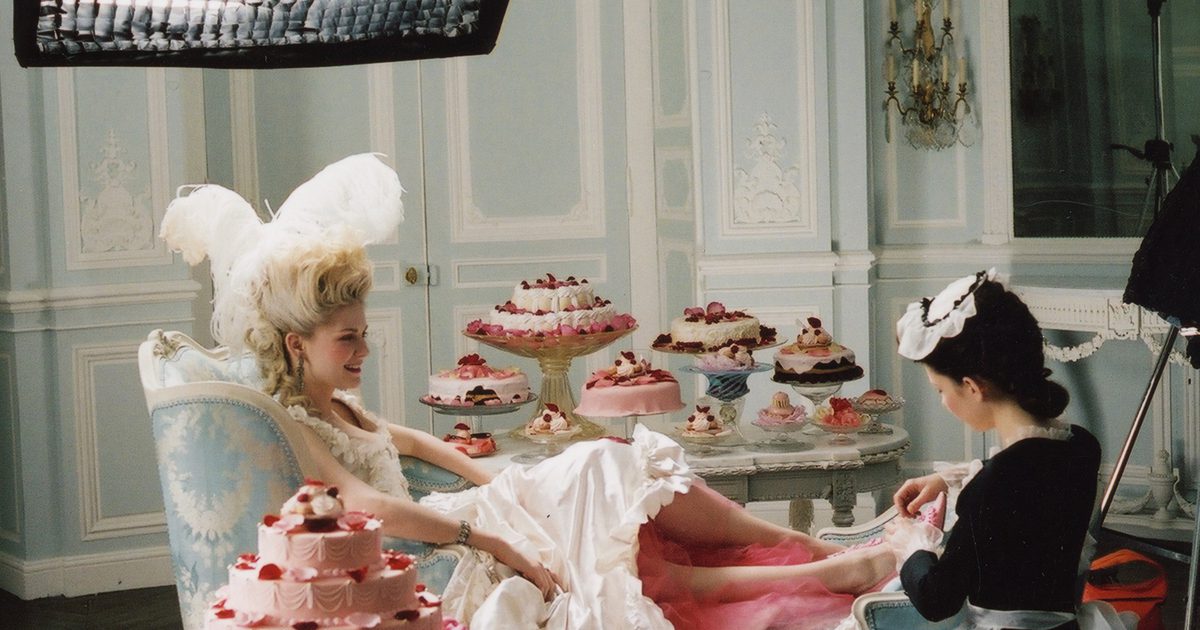
Beamed back to us through the BTS footage on anoughties digital camera, there’s another layer of nostalgia and charm to the pastel-coloured frippery of Coppola’s prettiest film. Those refracted images – apink-wigged Kirsten Dunst dashing through her gilded rooms, Barry Lyndon costume designer Milena Canonero adding ablue velvet ribbon around the actor’s throat – remind us of the film’s bold use of anachronistic colour and detail. But they also reveal small moments of humour and wisdom: someone cracking aSpinal Tap joke at the sight of afog machine, or Sofia telling Kirsten Dunst about her character: “They treat you like you’re just adumb girl and you let them. But every once in awhile, you let them know you’re not anidiot.”
Intended as amother’s document of her daughter’s artistry, it works as afeedback loop due to her daughter’s completion of the material. In its endless reflection, this unassuming film is its own Hall of Mirrors – intricate, melancholy and lovely.