












![Avery Cochrane Is Bringing Camp, Chaos and Big Pop Energy to Her Debut Album [Exclusive]](https://townsquare.media/site/252/files/2026/10/attachment-promo-pic-8-1.png?w=1200&format=natural "Avery Cochrane Is Bringing Camp, Chaos and Big Pop Energy to Her Debut Album [Exclusive]")
























The latest release from After the Masters – School of Velocity pairs two pianos, four hands and breathtaking virtuosity in a provocative musical journey mastered at Abbey Road Studios
There are compositions designed to impress.
Others are designed to make you feel.
With “Caelune,” Avohee Avoher sets out to do both.
Released September 30, 2026, the striking new work from Avoher’s evolving After the Masters – School of Velocityproject transforms two pianos and four hands into something far more intriguing than a showcase of technical virtuosity.

It becomes a conversation.
At times, it sounds like an argument.
At others, a seduction.
And occasionally, it feels like two musical forces chasing one another toward the edge of control.
From its opening moments, “Caelune” establishes a world of contrasts. Rapid arpeggiated figures descend from the upper reaches of the keyboard, answered by a commanding recurring bass motif. Almost immediately, the two pianos begin developing identities of their own.
They challenge each other.
They answer each other.
They collide, retreat and return.
And that tension becomes the heartbeat of the composition.

When Virtuosity Becomes Storytelling
Avoher clearly understands the great virtuoso tradition.
There are echoes of the technical discipline associated with works such as Czerny’s School of Velocity, but “Caelune” has little interest in behaving like a traditional technical exercise.
Technique is merely the language.
Emotion is the story.
Themes emerge and disappear. Delicate passages suddenly erupt into torrents of notes. Trills seem to open unexpected doors. Syncopated rhythms upset the listener’s sense of balance while chromatic runs and sweeping scales send the two pianists racing across the keyboards.
Just when the music appears ready to surrender completely to technical spectacle, Avoher pulls it back.
Something quieter appears.
Something vulnerable.
Then the machinery begins again.
That unpredictability gives “Caelune” its seductive quality. The listener is never quite allowed to become comfortable because the composition keeps shifting between opposing emotional forces:
Darkness and light.
Strength and vulnerability.
Control and abandon.
Beauty and disturbance.
Those contradictions are where “Caelune” becomes especially compelling.
This isn’t virtuosity for the sake of proving that something difficult can be played.
It is virtuosity being used to create tension, character and emotion.

A Musical Game Between Two Pianos
One of the most fascinating elements of “Caelune” is the relationship between its two pianos.
Rather than simply supporting one another, they often appear to be engaged in their own psychological game.
One introduces an idea.
The other responds.
One pushes.
The other resists.
At certain moments they seem perfectly intertwined; moments later, they feel almost adversarial.
The result is less like listening to two instruments and more like witnessing two characters whose relationship keeps changing before us.
And Avoher refuses to give the listener an easy destination.
Whenever the composition seems ready to reveal where it is heading, it changes course. Moments of technical brilliance dissolve into intimacy. Beauty is interrupted by subtle harmonic dissonance. The music builds toward what appears to be an inevitable climax, only to retreat once again.
Even the finale refuses the expected resolution.
Rather than simply returning home, “Caelune” gathers its remaining energy for one final technical declaration before two commanding chords bring the journey abruptly to an end.
No lingering goodbye.
No comfortable resolution.
Just impact.
What Does “Caelune” Mean?
Even the title lives between worlds.
“Caelune” evokes caelum, the Latin word associated with sky or heaven, and lune, the French word for moon.
Heaven above.
Moonlight in the darkness.
Celestial beauty on the surface, with something far more complicated moving underneath.
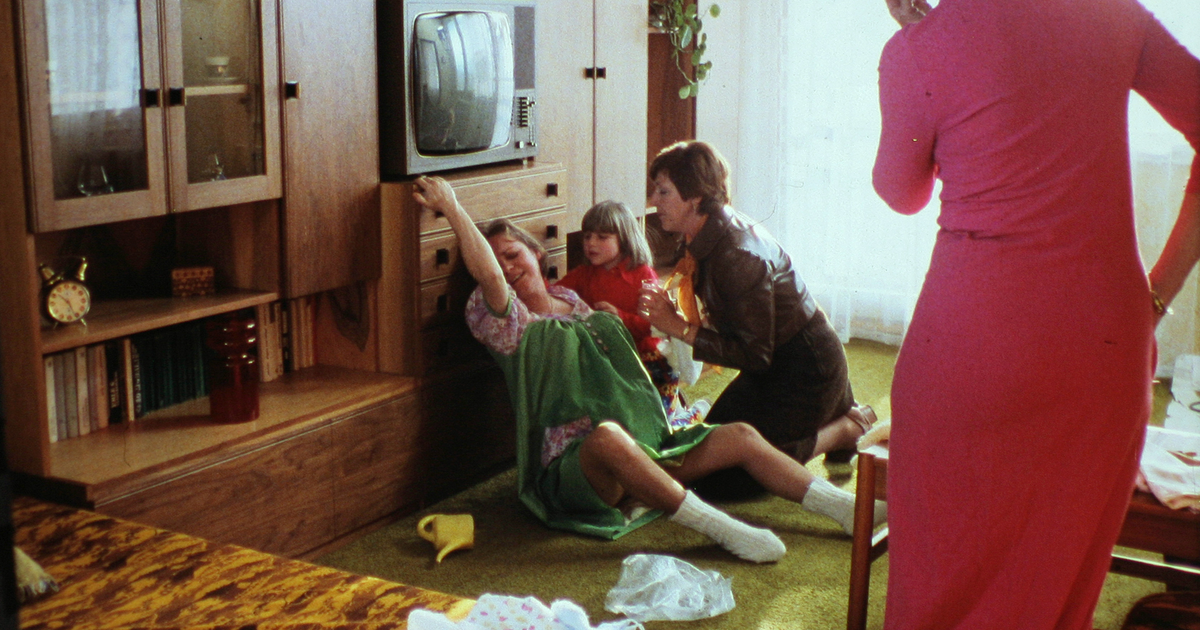
That duality extends into the official visual interpretation accompanying the music.
Rather than creating a literal narrative, the film moves into a darker and more provocative landscape of sensuality, temptation, intimacy and psychological conflict.
There is no single explanation.
That is deliberate.
Like the composition itself, the imagery leaves room for the audience to decide what they are witnessing — and perhaps more importantly, what they are feeling.

After the Masters
That freedom of interpretation sits at the heart of After the Masters – School of Velocity.
The project acknowledges the staggering technical achievements of classical music while asking a distinctly contemporary question:
What happens after technique has been mastered?
What happens when virtuosity stops being the destination and becomes the vehicle?
Can speed become emotion?
Can technical precision become storytelling?
Can two virtuosos create characters without speaking a single word?
With “Caelune,” Avohee Avoher makes a convincing argument that they can.
The piece respects the traditions that came before it without becoming imprisoned by them. Instead, Avoher uses technique as raw material for something more cinematic, emotional and psychologically charged.
Because virtuosity alone can astonish.
But when virtuosity carries emotion, it can become unforgettable.
Composed and performed by Avohee Avoher, “Caelune” continues the expanding musical world of After the Masters – School of Velocity. The recording received its final sonic dimensions at the legendary Abbey Road Studios, with mastering by Stefan Brown.
“Caelune” was released September 30, 2026.
RELEASE INFORMATION
Artist: Avohee Avoher
Title: “Caelune”
Release Date: September 30, 2026
Project: After the Masters – School of Velocity
Composed and Performed by: Avohee Avoher
Mastering: Stefan Brown
Mastering Studio: Abbey Road Studios
Listen to “Caelune” by Avohee Avoher on Spotify:
https://open.spotify.com/track/07KiwlBXlIXYB1ZMbH7MfM?si=cb2a391081974e36
Watch Avohee Avoher on YouTube:
https://youtu.be/q3d7L54UVAU
AVO Records YouTube:
https://youtu.be/9OJ2R9_s3gM