















































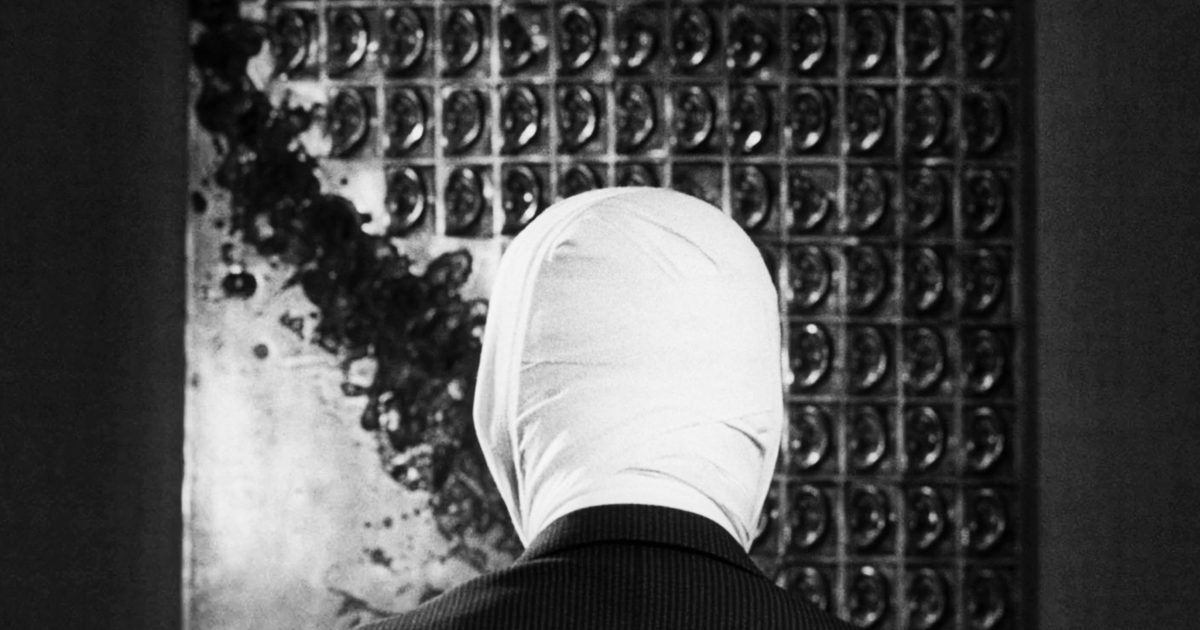
The question of survival becomes aspiritual one: how does the soul survive in aworld where the body is denied freedom or agency? InPitfall, agency disappears along with the spark of life, leaving the Miner to navigate aworld inhabited by silent, looping spirits in the abandoned town he moved to before his death.Woman in the Dunestakes these themes of endless labour and burrows into them even deeper: the entomologist Niki Jupei is trapped in ahouse in the dunes with an isolated young widow. If the two of them don’t dig out the sand that threatens them every night, the house will be buried alive. Without aladder, it seems that there’s no way back up from the dunes. All that’s left is the unforgiving nature of the elements, and the constant labour that literally keeps the two characters alive. The film has adeeply elemental language, drawing emphasis to the heat of the sun, the length of the nights, and the shifting, ominous threat of the sands while continuously drawing visual parallels between Jupei, the widow, and the captured insects. These mere mortals are made tiny, inconsequential. Their lives begin and end with the labour that they have no choice but to perform over and over again, every other possibility shrinking before them.
In the final act, Jupei begs to be lifted from the dunes, not so that he can be free, but just so that he can see the sea and the horizon beyond it, yelling up at the villagers who keep him and the Widow trapped there and insisting he won’t try to escape. All he wants is thirty minutes – anumber he quickly reduces to twenty, and then to ten. Anything outside of the confines of the dunes disappears before him to the point that even the possibility of escape, and that view of the horizon, lose their lustre. There is, he says to himself, always tomorrow. Tomorrow, and tomorrow, and tomorrow, until the last syllable of recorded time.