





































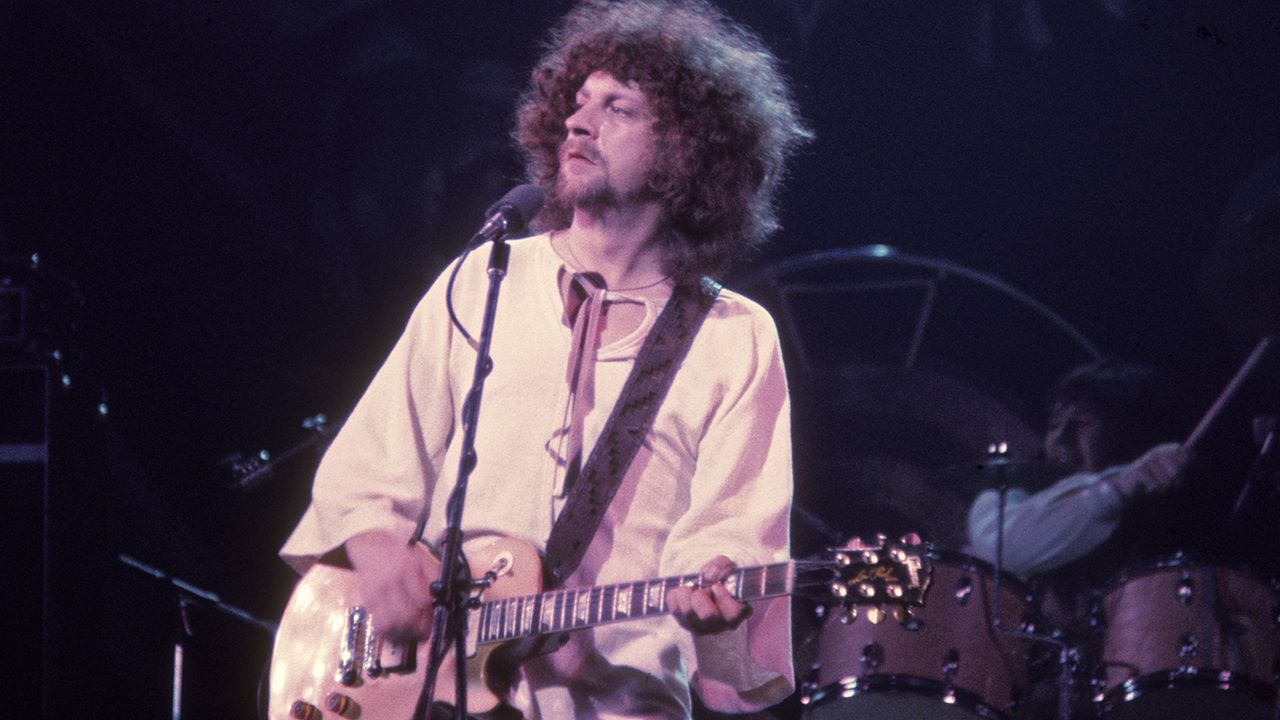
In 2016 Jeff Lynne looked back on the second half of the 1970s, a period in which Electric Light Orchestra became arguably the biggest thing in rock music – which he hadn’t noticed at the time.
ELO’s 1974 album Eldorado may have had a loose concept about a daydreamer journeying to fantastical places to escape his boring reality, but it was also their first bona fide pop album. It even contained a US Top 10 hit, Can’t Get It Out Of My Head. “I was always surprised when anything did well,” Jeff Lynne admits. “And they all started to do well at that point.”
The band’s upward trajectory continued apace with 1975’s Face The Music and its top-10 single Evil Woman, which Lynne professes to have written in minutes. “We were in the studio and I thought, ‘I ain’t got a single yet for this album.’ So I sent the other guys out to play football and said, ‘I’m going to make this up now in five minutes.’
Article continues below
“And of course, I didn’t think I would, but I did – I went to the piano and those three chords of Evil Woman just came right out of my hand.”
Prog fans might also have noticed the opening track, Fire On High, with its symphonic grandeur, multiple sections and eerie backwards message, which was drummer Bev Bevan proclaiming, “The music is reversible but time is not. Turn back. Turn back. Turn back. Turn back.”
“I used to get stick for that,” Lynne grumbles. “These weirdo guys – pseudo-religious people – said, ‘It’s all talking about the Devil!’ What a load of crap. If you say something and then play it backwards, it always sounds like that.”
From then on, ELO bossed the second half of the 70s. A New World Record (1976) sold five million copies in its first year, and included global hits Telephone Line and Livin’ Thing – testaments to Lynne’s ability to compress elaborate musical ideas into three and four-minute pop symphonies. “Tightrope is quite complex,” he agrees. “There’s quite a lot going on in those songs. I used to have a joke in the old days where I’d say, ‘I don’t stop till I can see through the tape.’”
Would he have just fiddled and fiddled if he’d been left to his own devices? “I would have, yeah. But I’m glad I didn’t now because it left the songs fresh. I only had a certain amount of time anyway: probably about six weeks to make an album, and a month to write it.”
Next, 1977’s Out Of The Blue double-LP became a 10-million-seller. It featured Sweet Talkin’ Woman, Turn To Stone and Concerto For A Rainy Day, containing Mr Blue Sky, which catapulted ELO to a whole new level of stardom. It was written in four weeks in the mountains of Geneva – and that included a period of writer’s block.
“The weather was crap for the first couple of weeks,” Lynne remembers. “I didn’t come up with anything and I was down the pub all the time, this nice little tavern in the village. Finally, the weather cleared, and that’s what gave me the idea for the words to Mr Blue Sky. Inspiration could come at any moment. And did, frequently.”
ELO’s subsequent tour was suitably spectacular, featuring an enormous set and a hugely expensive spaceship stage with fog machines and a laser display. Billed as The Big Night, it was the highest-grossing concert tour ever up to that point.
“That was fun!” says Lynne. “The spaceship was great. At the end of the show I’d jump off the back of the stage and watch it closing. It made such a bloody racket. There were jets of steam coming out, a ridiculous low rumble, and this big, loud classical music as it closed. That, for me, was the highlight of the show.”
Was that weird – the boy from Shard End in Birmingham now part of this Spielbergian extravaganza? “Yeah! The thing is, though, it happens so gradually that it’s not a shock. It’s like, ‘Wow, it’s got better than it was last year.’”
By Out Of The Blue and follow‑up Discovery, ELO were the biggest rock band on Earth, arguably rivalled only by fellow quasi-proggers Supertramp. Everything they released, everything they did, was a newsworthy event. Was Lynne aware of how mega his band were?
Watch On
“Not really,” he says. “Obviously when you put out a record you hope it’s going to do well. I used to be very wary of reading anything in case it changed me or my thoughts about what I was going to do next. Some of the media were great, like Kenny Everett. But some were wicked. You got some reviews that were like, ‘Bastard!’”
Still, creatively speaking, did Lynne feel as though he was on a roll? “Yeah, I really did. I could do no wrong. Every song I wrote came together easily. It was just one of those patches – about five years’ worth. I was really lucky to go through that.”


.jpg "Massive Attack’s First Song in Six Years Features Tom Waits")